
Patrizia Paoletti Tangheroni has been and is many things. Researcher and consultant for the European Union and numerous UN agencies, member of the Italian parliament for two legislatures and mayoral candidate in Pisa, teacher and president of foundation, mom and grandma.
Nate Ament is one of the best college basketball freshmen, a 2.08m wing for Tennessee, he will surely be a lottery pick in the next NBA draft and he might even play for our national team.
Why does the Vols’ talent hold an Italian passport? Patrizia Paoletti Tangheroni is also the answer to this question.
From Egypt to Rwanda, a life for Africa
“I don’t know,” she laughs in response to our question about how many African countries she’s visited. But some have clearly marked Patrizia Paoletti Tangheroni’s life, starting with Egypt, where she was born and lived until President Gamal Abdel Nasser nationalized the Suez Canal Company in 1956, expelling the foreign companies involved in its construction—including her family’s, the Paolettis, who had lived in Cairo for four generations.
She then arrives in Italy, in Pisa where her father studied veterinary medicine, marries Marco Tangheroni, a university professor and medieval historian, and to follow her father on a European Union livestock project, goes to the Central African Republic: “My father realized I’d go on my own,” Patrizia recounts. “I traveled the country, crossing villages and areas that had never seen a white person, among people who were afraid of me. And I know exactly the moment I fell in love with Africa and decided I had to do something for its people. I’d ended up at a Belgian mission in the middle of Bantu territory; there was a mango tree with kids climbing it for the fruit, but as soon as they saw me, they ran off while their mothers laughed and started talking to me. That day, I realized I’d love those people like no other expert ever could.”
From Chad to Niger, Burkina Faso to Mali, Cape Verde to Burundi, Patrizia travels the entire Sahel working as a consultant for various UN agencies like the FAO, UNICEF, and UNESCO. “And I had the great fortune of succeeding in my work. I read a lot, but the most important thing is talking to people in the villages, trying to understand what they need, and shielding them from the crazy decisions of white officials sitting in Geneva or Brussels who know nothing about Africa.”
And speaking of crazy decisions made by the West, Rwanda is probably the most tragic example of 20th-century colonization, with clear blame on Belgium and France—and the UN—in the process leading to the Tutsi genocide in 1994. It’s amid a “situation of extreme ethnic discrimination” that Patrizia arrives in Rwanda in 1986, this time as a European Union consultant for building a school in Kicukiro District, on the outskirts of Kigali. “I chose a house on the edge of the capital,” she explains. “I lived in the last white people’s house, and next to me was the first African hut. A remarkable woman lived there, whom I admire greatly—the only daughter of the last Watussi king’s prime minister. We became friends, as much as an international consultant and a grand lady of the Watussi aristocracy could. And she taught me more about Rwanda than all the UN consultants.”
“I don’t know how to do anything, but I can learn”
Godelive Mukankuranga is 16 when she knocks on Patrizia’s door. She’s the daughter of her neighbor, doesn’t go to school, and has nothing to do. “I’d like a job,” she says. “What do you know how to do?” I ask. Her answer changed our lives forever: “I don’t know how to do anything, but I can learn,” Patrizia recalls. She entrusts her with managing the staff and all the project administration “pretend,” because in reality Patrizia handled it, “but she still figured out that I paid people like ministers…”.
One day, she gives her her computer and leaves her alone to input data. When she returns, Godelive has done the entire job perfectly: “I went straight to her mother and asked why she wasn’t studying. She brought me all her report cards—she was top of her class but couldn’t go to school anymore because she was Tutsi. The only place she could was the Belgian school, where fees were sky-high. So I called my husband, and we decided to bring her to Italy.”
In the late ’80s, Godelive becomes the first Rwandan girl adopted by the Paoletti Tangheroni family; two years later, her cousin Beatrice arrives, and finally Yvonne, the youngest of her sisters, who has an incredible story told in books and documentaries, including 18 months in the Goma refugee camp in Congo, but with a happy ending.

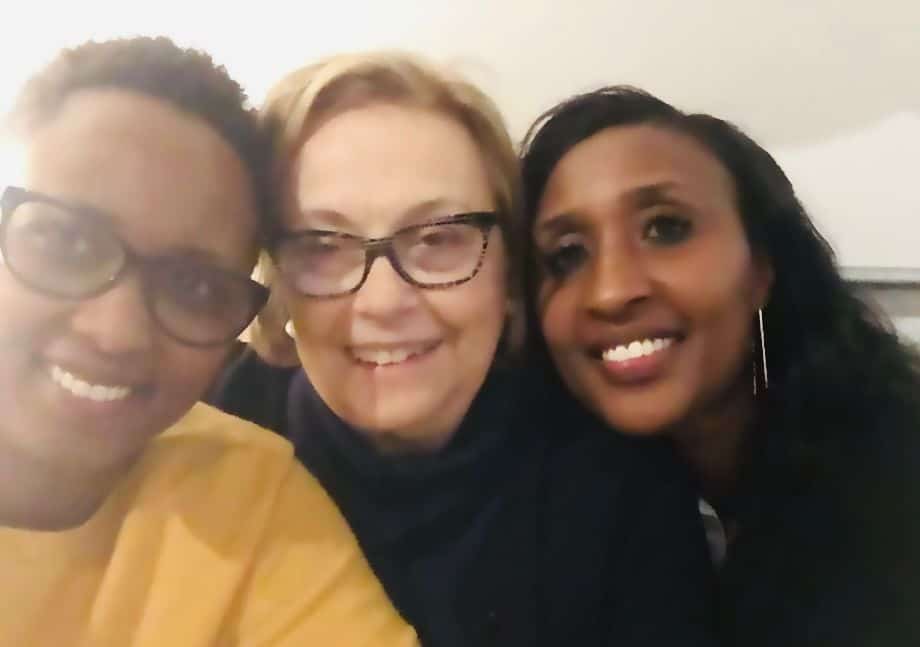
Yvonne, Patrizia and Godelive
Among the hundreds of thousands killed by the Hutu are Godelive’s mother, a brother, and two sisters. She returns to Rwanda in 1995 with her cousin at the end of the Tutsi genocide, after graduating and already working as a nurse in Pisa and then a hospital in Florence.
She speaks Italian, has an Italian passport, and is a full Italian citizen, but after reuniting with Yvonne and bringing another sister to Italy, Apolline, she returns to Rwanda for long periods, working on UNICEF missions as a nurse. She considers herself a “lucky one” and wants to do everything possible for her country.
The giant and ‘La pazzeria’
In 1998, the second life-changing encounter for Godelive arrives. Albert Ament also works in Rwanda – born in Michigan to an Irish-American family. He’s over two meters tall and, after a stellar basketball career in Division II with Wayne State University, decides to head to Africa, teaching English and French.
“He’s her great love, an Irish giant who’s truly a wonderful person. In Italy, he’s obviously become Albertone (“The Big Alberto” ndr); they’ve gotten married a thousand times,” Patrizia recalls laughing – “in Rwanda, Italy, various consulates, and then their first son Emmanuel was born. They lived two years at my house while Albertone sorted things in America, where they eventually went.”
Emmanuel, called Manny, was thus born in Pisa, but the Ament family life shifts to Manassas, Virginia. Leaving Italy “was a heartbreak,” and Godelive didn’t know a word of English, so “she started working in an Italian restaurant while retaking all the exams to become a nurse in the US,” Patrizia continues.
Meanwhile, the Ament family fills up with boys, as Alexander, Frederick, and finally Nate are born.

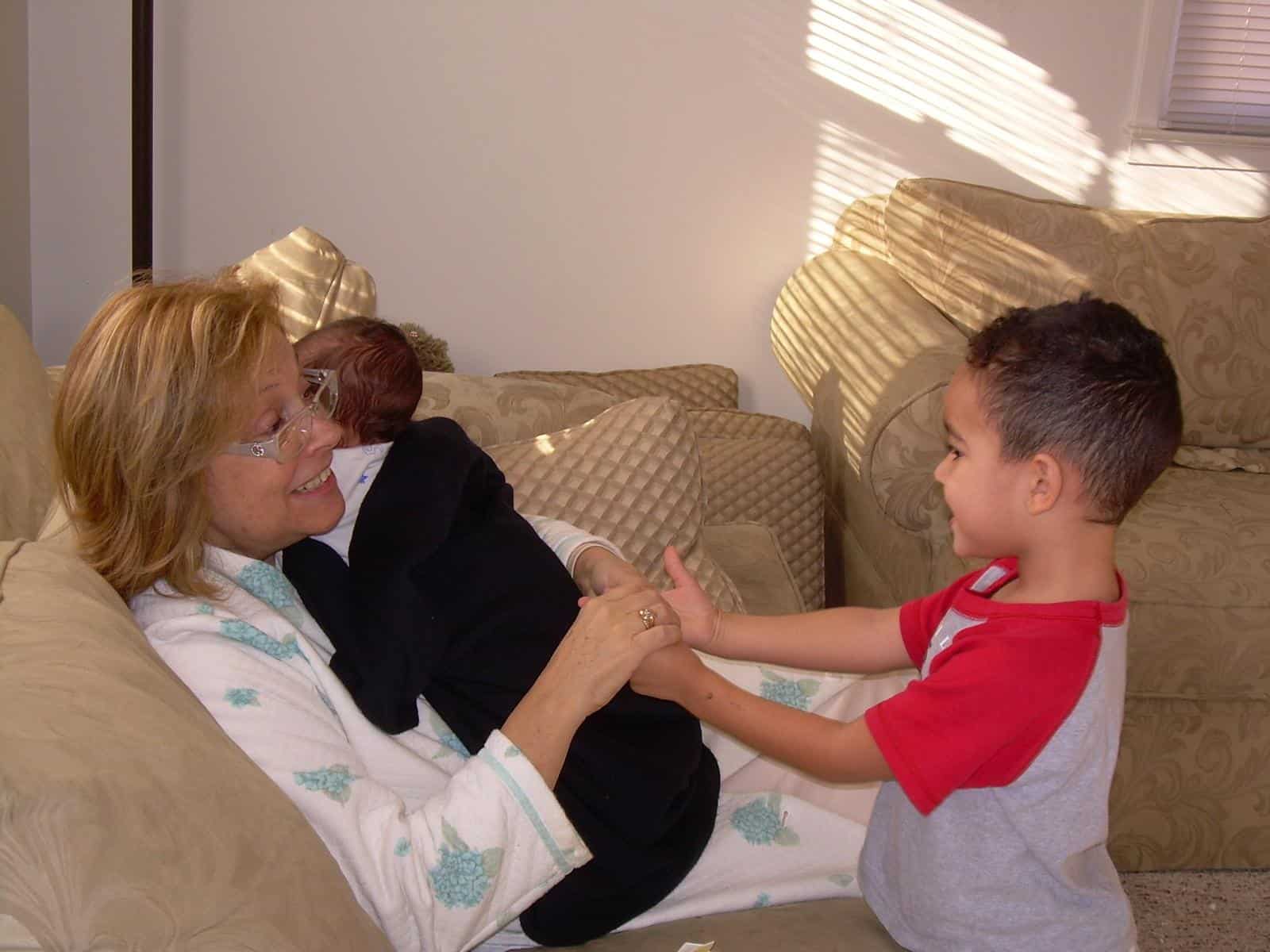
Patrizia with Nate and Frederick
“Albertone wants to speak Italian because he learned it in Rwanda working with an Italian NGO, and he calls his family ‘la pazzeria ( “The craziness”)’. They’re hilarious and happy; they all grew up in joy,” recounts Patrizia, now Grandma Titti. But make no mistake—in a house with five males, Godelive is in charge: “Godi is amazing and super strict; they’re all incredibly polite and very religious. She’s the family’s backbone”.
Nate the Watussi
It’s thanks to Godelive that all her sons have Italian passports, since under our laws, one parent is enough to pass citizenship by iure sanguinis. And to Italy, Godelive has stayed “deeply attached,” as Patrizia explains, and as she herself says: “Everything I have is from Italy”. “She’s always kept coming to Italy, and we talk every other day; sometimes I call just to hear her wonderful laugh. She came for her 50th birthday celebration, and until COVID, I’d spend a month with them in Virginia for Christmas.”
Nate was born in December 2006, “and I went with Godi’s sisters to his baptism,” while he’s come to Italy just once. He’s gone to Rwanda three times instead, the last one last summer with Grandma Titti.

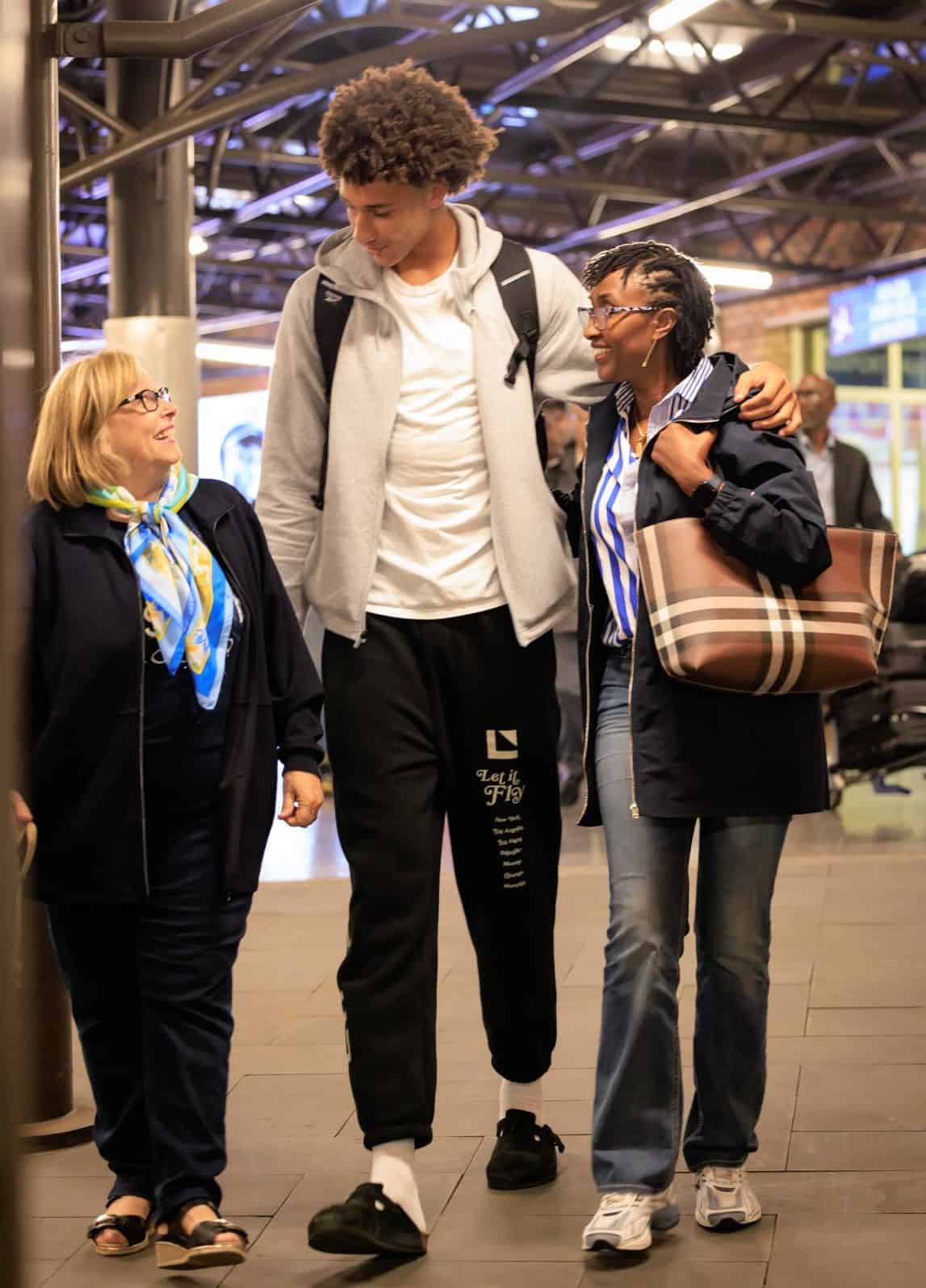
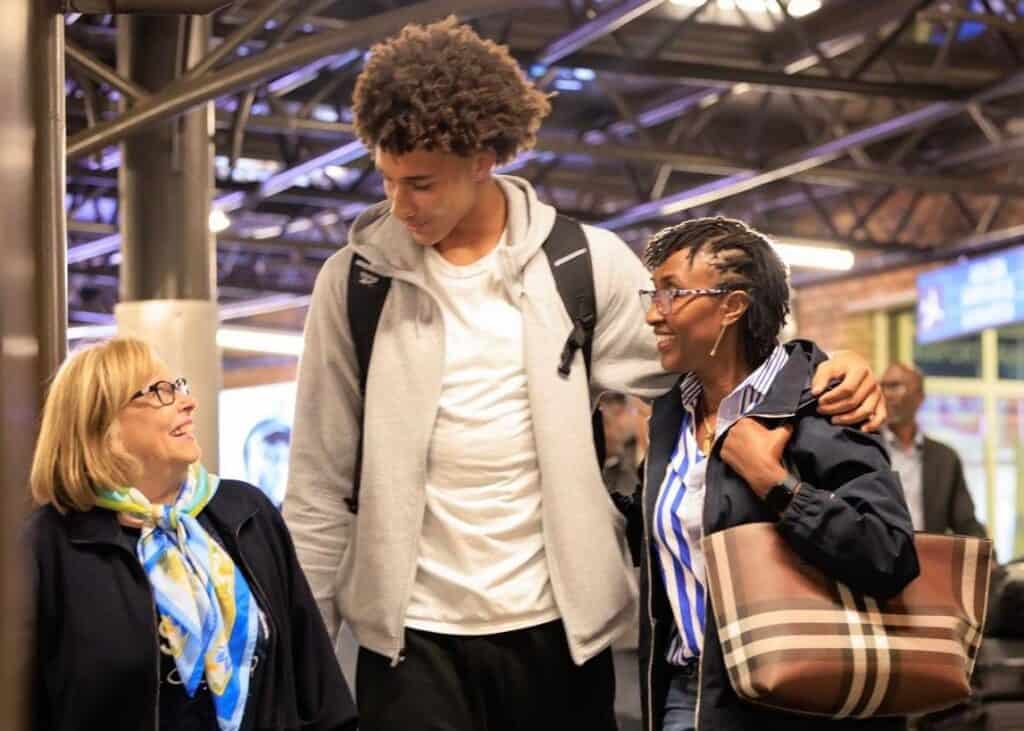
Patrizia, Nate and Godelive at the Kigali airport
“I don’t watch the games, but I follow all the scores. I’ve marked them on my calendar and I know when Nate is playing. But I don’t tell him,” she explains, smiling, “because I don’t want to put any pressure or tension on him. He knows I follow him, I love him very much, and he’s a great, very calm kid.”.
Even in a rollercoaster season for Tennessee, Nate is living up to expectations with averages of 16.2 points and 6.4 rebounds, despite struggling with threes and needing a few more kilos: “But that’s how he’s built—DNA is DNA. And his bones certainly won’t break; he’s Watussi!” Patrizia replies, dashing hopes of seeing Nate on the Italian national team one day with a consideration that’s as true as it is decisive: “I think basketball is more important in the US; in Italy, it’s not like soccer.”
But where Nate plays is just a detail in a story Patrizia wants to end with the greatest lesson she’s learned: “It’s not true that adopting people from a distant culture is hard—on the contrary, it’s easy: just respect their family and where they come from. We never thought we were giving something to Godelive; we always thought she was giving to us”.