
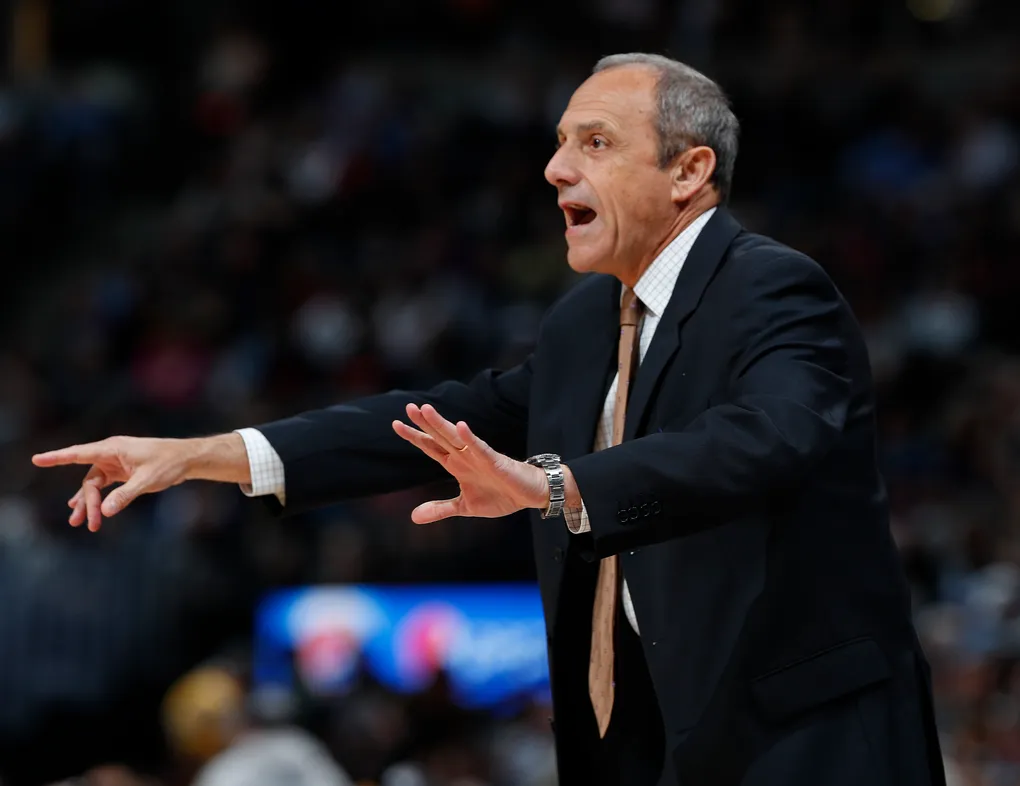
Ettore Messina has had a long relationship with the NCAA, which he has studied and known closely for more than 40 years. In this extended conversation he covered with us the most interesting topics of a world undergoing enormous change that is having a major impact on European basketball — and which could also become his next destination.
From his friendship with Dean Smith to the arrival of NIL, from Italian players in the NCAA to his own future, Messina retraced the history of his relationship with college basketball in an interview we split into three parts.
You started coaching early, in the 1980s, and even then you began to take an interest in the NCAA. How did you get close to that world and what was the reality like back then?
Probably because, if you remember, at the time the foreign players who came to play in our Serie A clubs were almost always former college players. True professionals started arriving later. All the players I saw as a young man, from Steve Hawes in Venice to Bob Morse in Varese, came almost entirely straight from college. Even the Italian coaches who went to the United States to study or observe would first stop with Lou Carnesecca, who was something of a meeting point for those coming from Italy, and then move on to the great coaches: you went to see Bob Knight, you went to see Dean Smith.
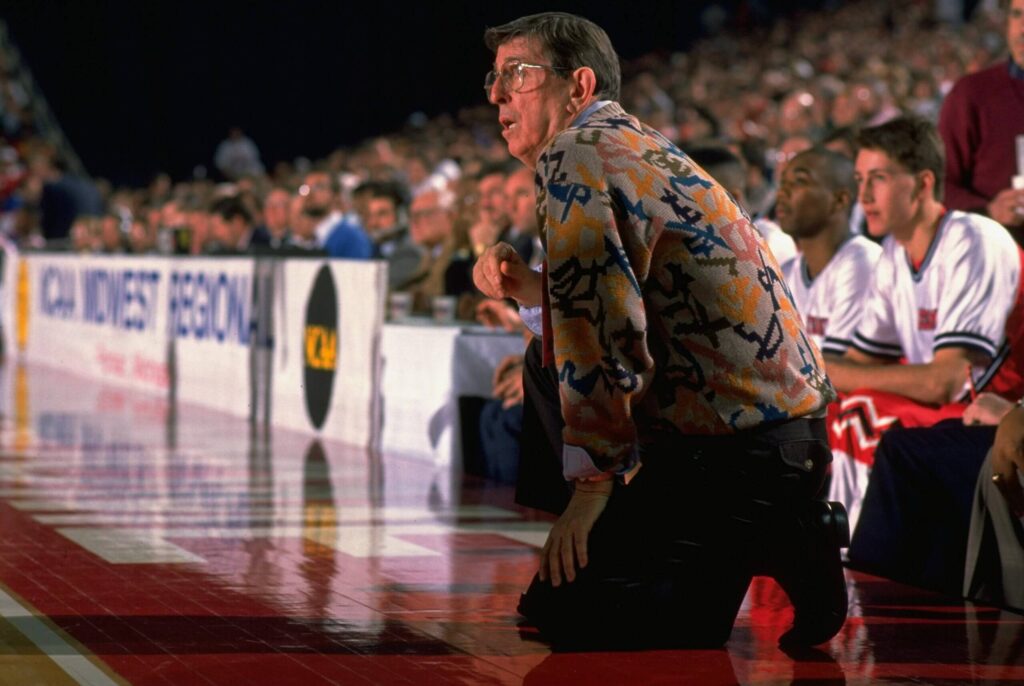

That was the basketball you saw; the front page of Giganti del Basket was usually dedicated either to Italy or to college basketball, not to the professional game that you followed only, at least in my recollection, later. Also because players all came from college, where there were great schools, great rivalries, legendary coaches who stayed not four years but 40, stayed twenty years in the same place, becoming the very face of the university.
Toward the end of the 1980s I began to travel to the United States, and my first real exposure was above all to these great college coaches, as well as to Hubie Brown, who as an NBA coach attended the Five Star Camp every summer — the ultimate event for high school and college basketball. I remember one episode: I was at the Five Star Camp and Jeff Lebo was there — at that time a hugely famous guard in North Carolina, pursued by all the major universities. One day they came to watch him, staying behind the net because they couldn’t recruit directly inside the camp; everyone was there, from Bobby Knight to Dean Smith — it felt like a movie, everyone watching this kid. The camp took place near Pittsburgh, organized by the legendary Howard Garfinkel, who created camps all his life, and all the best coaches attended. That week Rick Pitino and Hubie Brown also taught, but everything was focused on boys leaving high school and headed to college. That episode drew me even closer to the American collegiate world.

When I coached the national team I had a lot of free time, because at the time there was no part‑time: for three consecutive years I dealt with the Under‑18 and Under‑20 teams, bringing them to play in the United States thanks to a collaboration with CONI, against mid‑level Division I colleges. We were based in Davidson or in Connecticut just outside New York, and we played against every available school. It was an incredible experience for meeting coaches: once we faced Manhattan College, coached by Fran Fraschilla, who today has become ESPN’s guru. A very beautiful, very fascinating world, which is now acquiring even more interest because of the NIL story.
You mentioned Dean Smith several times; he stayed forty years at North Carolina. You had a very close relationship with him — what kind of coach and man was he?
I can say I became friends with Coach Smith because I was very fortunate: the year he was invited to give a wonderful clinic in Milan, they asked me to be his translator. At the time I was an assistant at Virtus and coaching youth teams; I spent five or six days with him, from morning to night: his wife was there, Giuliano Airoldi was the organizer and sponsor of the clinic, and coach Gamba was there. I remember breakfasts, lunches, dinners, the clinic: I was always there listening to this extraordinary coach chatting with Gamba.
From there a nice relationship developed: he began inviting me to North Carolina, and for three or four years we brought some interesting Virtus players to his summer camp. The next year he came to Sardinia for a wonderful clinic organized by another great former coach, Pierpaolo Murgia, bringing his family. I watched his practices many times. Once Larry Brown invited me to Chapel Hill, where the Indiana Pacers held training camp: I spent a week watching the practices, and after each session, morning and evening, Dean Smith, Bill Guthridge, Roy Williams — who was then the young assistant — and Larry Brown would sit down to review practice. I was allowed into that little room to listen to four geniuses discuss incredible details: footwork, cutting, timing, the pass — it was impressive. In those moments you truly understand how attention to detail, the organization of practice and the pace of training and game are what make a huge difference.
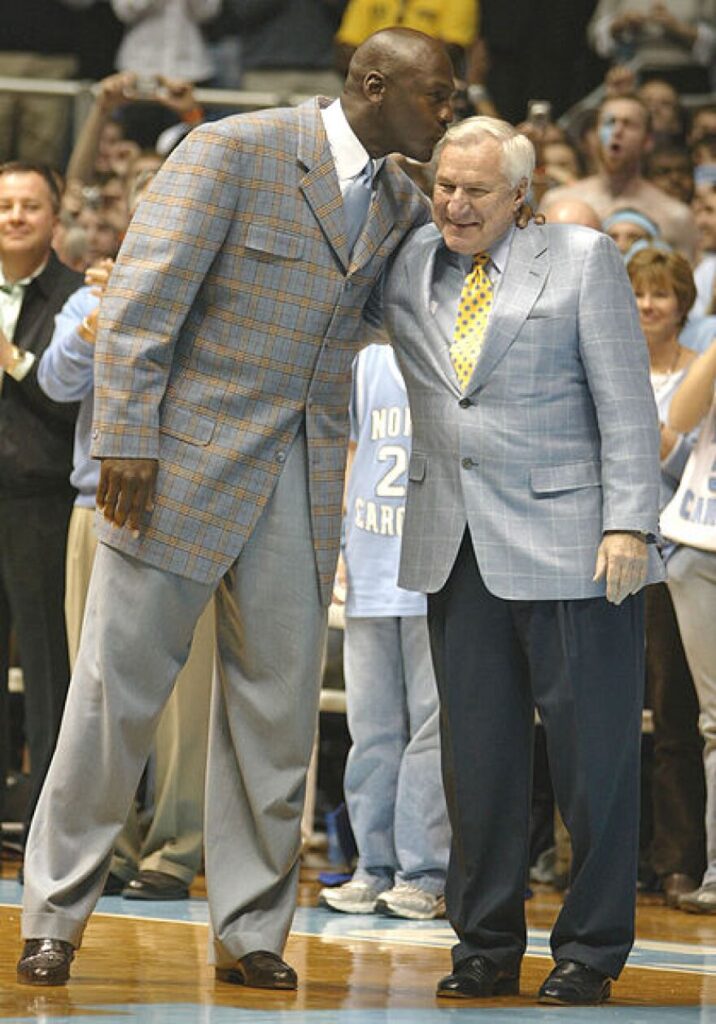

The nicest anecdote, though, is that in one of those years when we were in Davidson playing against colleges of a lower level than North Carolina, Smith invited me to bring our team to see one of his practices — I can’t recall whether it was the Under‑18 or the Under‑20. We took them to see a practice that felt like being in a church. At the end he called me and asked what we would do afterward. I told him we would return to Davidson by bus. He replied: “No, no, no, now we’re going to dinner.” He took the whole team out, dined with us, talked with the players. Aside from his hospitality, there was this ability to open up, to be available… he was already a Hall of Famer, Dean Smith revered throughout the basketball world, and yet he made this enormous courtesy — but he was made that way.
Let us not forget he is especially known for his battles against segregation: he would go to dinner with a black guest in downtown Chapel Hill at a time when it was quite difficult to be seen with people of color. He recruited African‑American players without hesitation and was among the first to give opportunities to black assistants. He was truly committed to social progress and civil rights, far beyond simply being a basketball coach.
He represents the perfect example of what the NCAA was and perhaps is no longer: a world centered on coaches who were also educators and teachers. Technically, what were the differences with our league and how has college basketball changed from the early 1980s until today?
The first difference that comes to mind is the shot clock: it was much longer than our 30 seconds, which later became 24; they have only been at 30 for about ten years. The second difference is the length of stay in college: back then players stayed for all four years, and for those four years they worked on individual and team fundamentals and became astonishing players; indeed, when they left college they were fully ready to play in the NBA.
In the 1989–90 period Danny Ferry came to play in Italy after completing four years at Duke. He was an incredible player technically and, out of college, had a massive impact at Il Messaggero Roma with more than twenty points per game. He came to play because he wanted to use it as a way to free himself from having been drafted by a weak team in order to sign, as he did the following summer, with a stronger club. Today a player who leaves college after one or two years honestly struggles a lot if he tries to play in the EuroLeague.
There is an interesting point to consider: until the 2000s, before the gradual experiment of the one‑and‑done era — a practice for which John Calipari at Kentucky was the precursor, the master, call it what you like — the system was different. In recent years, because players stay little time in college and aim straight for the NBA, youth AAU basketball is played almost entirely imitating the NBA: lots of transition, many quick shots, a lot of isolation and some pick‑and‑roll, depending on your view maybe too much pick‑and‑roll; you don’t see many other things.


Consequently, college coaches have tried to adapt for two reasons: first, basketball is moving in that direction; second, they must make themselves attractive to prospects during recruiting. A young player wants to play for a coach who plays differently than the old‑fashioned “system coach” term implied. That no longer exists because coaches are not stupid and they adapt. However, while in the NBA this concept is taken to extremes — everyone plays the same way — in the NBA they play 48 minutes, there is a regular season where the value of a single game is far lower compared with the EuroLeague or a national championship, and then the stakes rise dramatically in the playoffs. NCAA teams have to win their conference and then avoid elimination in the tournament.

So there is a need to play a certain way because it appeals more to the players, because basketball is trending that way, and there is the desire to appear modern to kids who are often already managed by agents at 17 in a quasi‑professional relationship. But on the other hand you must give the right value to every single possession, and understand that depending on the score and the clock there are different kinds of shots: if you keep dribbling, making one pass and a shot, two passes and a shot, very quick shots, a lot of isolation, you risk wasting a 15‑point lead in five minutes and being eliminated from the ACC, Big Ten or Big 12 tournament.
College coaches, in my view, are trying to combine two important parts of the game: one is the part everyone loves — running, jumping, shooting — and the other is attention to score and clock, the ability to remember that you need not only three‑point shots but the famous equation: three‑point attempts, twos at the rim and free throws earned. If you rely solely on the three and forget to attack the paint and draw free throws, you risk throwing away the leads you built. And that, therefore, nobody fully does. That is why, for us European coaches too, college basketball is regaining a comparative role different from the one it had seven or eight years ago.
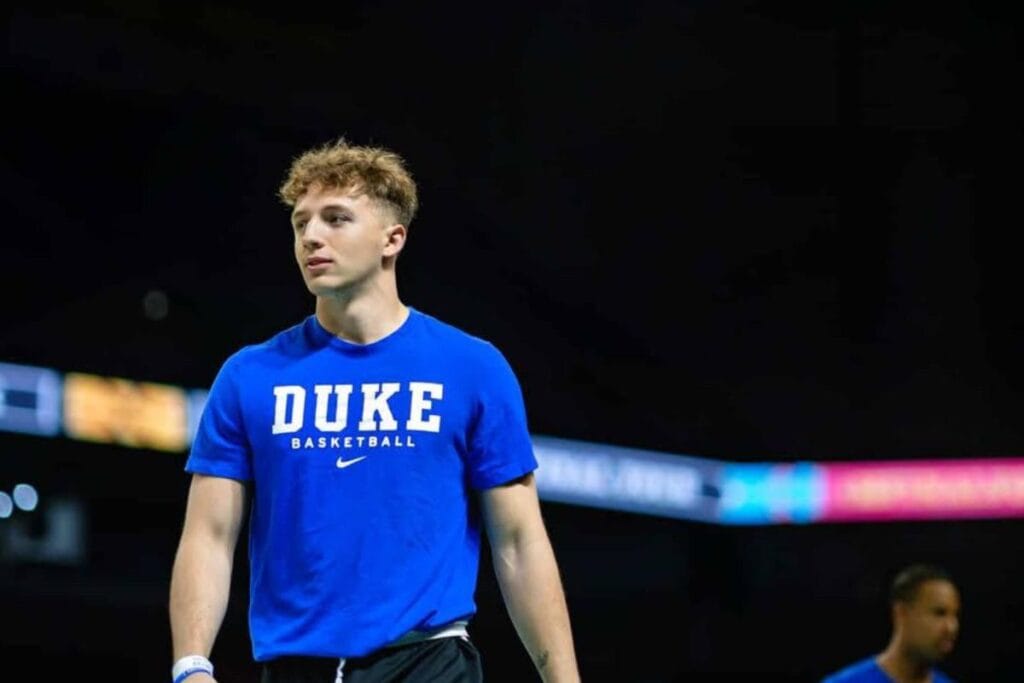
This year I followed many Duke games for emotional reasons but also convenience — my son is there — and I saw almost all of Duke’s games, but I also often watched Connecticut and St. John’s; these teams run, they are made up of young players who inevitably make mistakes but who offer interesting tactical impact to watch.
In the next installments: the arrival of NIL and its impact on Italian basketball, an analysis of former Olimpia players who went to the NCAA, and his future.