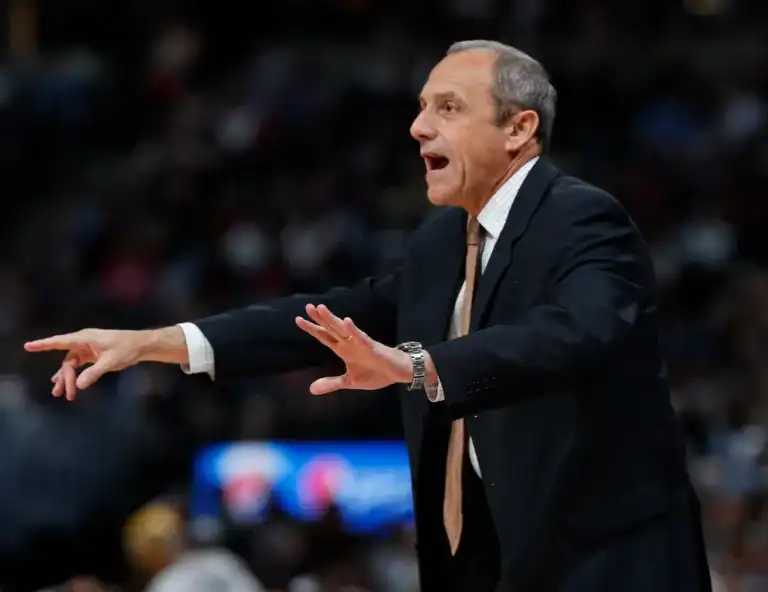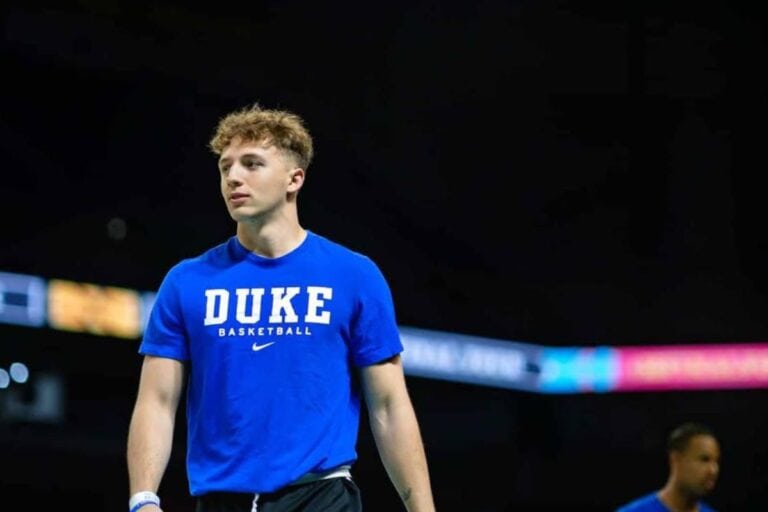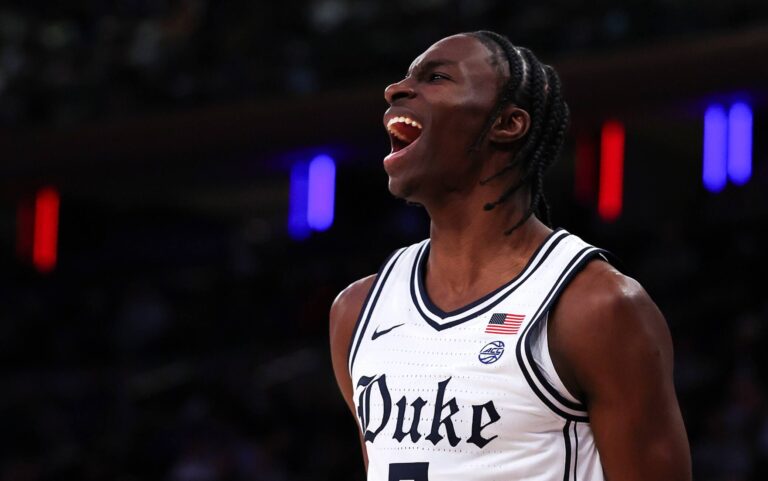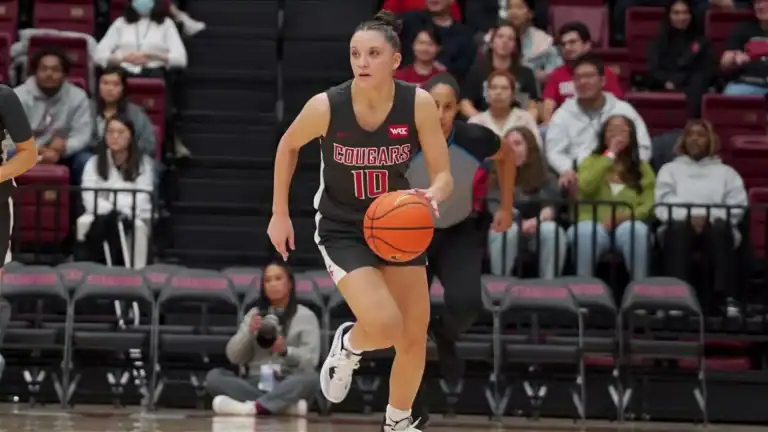
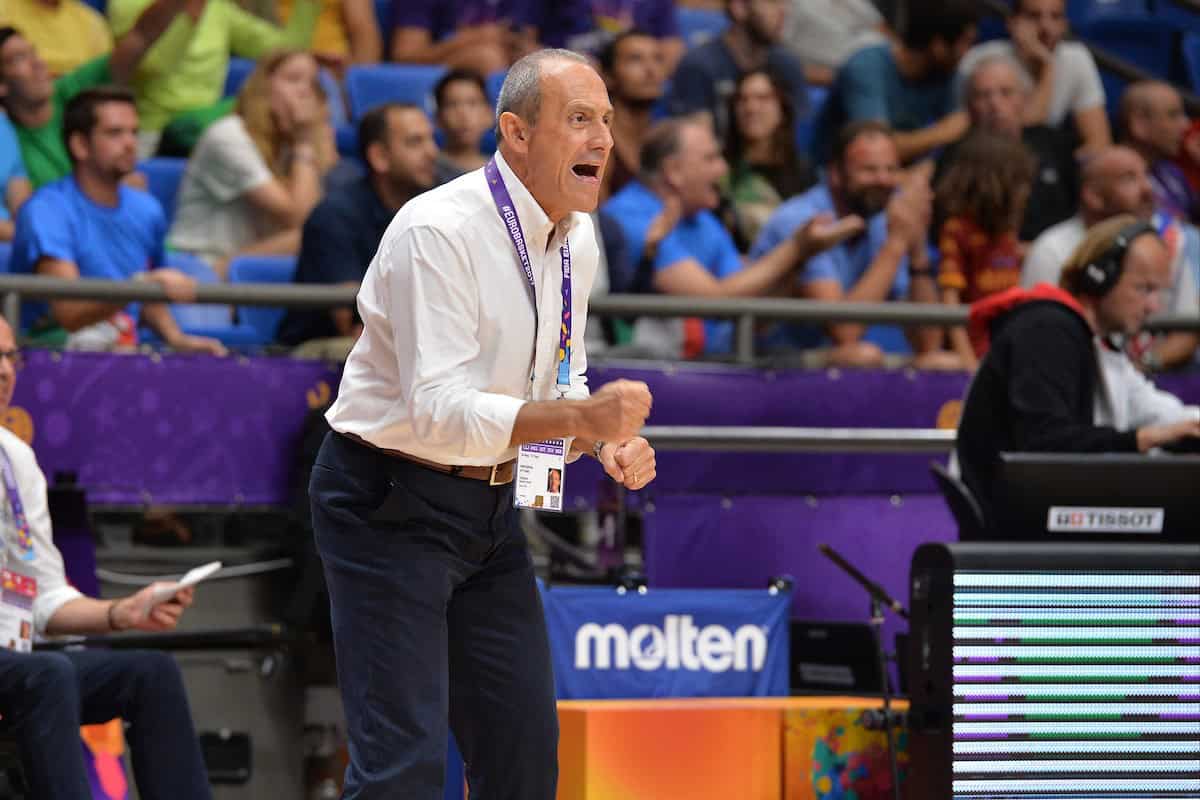
From the beginning of his long relationship with the NCAA, we arrive at the present day and analyze in the second part of our interview with Ettore Messina the impact of NIL that is revolutionizing the world of the NCAA, with strong repercussions also on European basketball. Because Division I is now a professional league that competes with both the EuroLeague and the NBA.
A radical change is underway linked to the enormous amount of money that is overwhelming the NCAA with NIL contracts and not only. Guerschon Yabusele at 30 returns from the NBA and goes to take €12.5 million in three years at Panathinaikos. Nikola Kusturica, who is a 2009 so he is 17 years old, will earn $12 million in two years at UCLA. Is everything going well or is something getting out of hand?
We are all shocked by this, because it seems difficult to find a criterion in all of this. Let’s see the differences: the EuroLeague, and this is Bartzokas saying it not me, has ‘accused’ certain clubs of having inflated the market and of having completely driven it out of control. The facts are these, you can say that’s fine or not, then the Greek clubs have enormous advertising revenues, sponsorships, they can afford it, but we’re not going to go deeper here.
In fact, when with Olimpia Milano we went to the Final Four in 2021, in that team there were only two players who earned more than one million euros. Now with one million euros I don’t say that a good player looks at you and tells you to come back in a few weeks but almost, because salaries have increased a lot since 2021. In Europe there is nevertheless a Financial Fair Play system that justifies the fact that clubs that collect a lot can spend a lot, and we must not forget that television rights in Greece are worth 8–10 times the value of the Italian ones. Then we can philosophize whether the objective must be a competition in which we all start equal with the same salary cap as in the NBA, or a competition in which whoever collects more can start ahead.
In the United States, in the NCAA we have fans who are then extremely wealthy investors who are there today and could be gone tomorrow. Two years ago Rick Pitino came to Italy to see some boys from our youth sector, in particular Luigi Suigo. We went to dinner together and Pitino showed me on his phone the photo of his main investor and now I don’t remember the exact figure, but essentially that single financier was supporting almost entirely the St. John’s program. He told us clearly that without that booster, they could not remotely afford certain players.
So it is even more out of control because then the NCAA is not part of the International Olympic Committee or FIBA and consequently, if they do not introduce internal regulation or if the American government does not intervene directly, they will continue to do what they want in terms of pay. The only thing we in Europe can do is prepare ourselves, creating the ideal conditions to welcome these boys when they decide to return. In a couple of years, many of those who went without managing to establish themselves at the hoped-for level will begin to come back. Colleges will not continue to pay significant sums to athletes who after one or two years do not perform according to expectations, and the boys themselves will want to return to Europe.
At the same time, I find it hard to think that a player who is having success in college will decide to return at the end of the season to play only two months in the European playoffs, especially if he has in hand the promise of an NBA contract. Because if he then gets injured, that contract is torn up before it even starts. Those who return will above all be the somewhat ‘disappointed’ boys, and this will open an important issue related to the management of this disappointment, which cannot be managed only with money. A young man who left with great ambitions of earnings, of becoming a star, etc., then if in a college he didn’t make it, the NBA is gone and also that kind of money. And so mentally he must also prepare himself for a return to readapt to very competitive contexts such as the national European leagues or international cups.
In light of this huge amount of money, does it still make sense to define the NCAA an amateur league, or is it in all respects a professional league?
The EuroLeague is a professional league played by veterans with the intensity of college players, the NCAA is a league theoretically played by young boys who however are treated like professionals. So by force of circumstances it is a professional league.
There are more than 30 Italian boys who will play next year in the NCAA and the debate is open: there are those who complain about the flight of talent with an impoverishment of our Serie A, with clubs that struggle to complete rosters for lack of Italian players, and those who instead argue it is a great growth opportunity. What is your judgment?
You are talking to someone who has drawn everyone’s criticism for having said not a particularly intelligent thing, but quite obvious and that is that there are not six high-level Italians for each of the Serie A teams. It is a mathematical fact and no one must be offended by this.
Our historical and fundamental problem is what to have these boys do who very often are high level in the youth sector and in the youth national team but then, when they finish the youth teams and find themselves in the normal pro condition, are not ready to play immediately in Serie A. And perhaps in A2 one prefers a more experienced player to try to win the games. The problem is always the same, the middle way is missing.
The middle way is the American college, even if there is this hunt for the highest contract with them which however, if you don’t play well, they thank you and send you home. This can be a solution for a good number of boys who go to have an incredible life experience and then go play. So honestly I don’t see all that wrong with it, on the contrary.
I saw this boy who recently debuted in the senior national team, Giovanni Emejuru, who can become a player, certainly. I cannot help but think that it did him good to go play in a mid-level American college where he had minutes and did a great individual job. I wonder: if he had stayed in Italy, maybe worse if in a strong team where you struggle to immediately find minutes, what would have happened? Good for him that he chose college, good for him. This boy in these last very important World Cup qualifying games helped the team a lot.
If we want to maintain the rule of six Italians on the roster for each team, we must hope that many boys go to have this kind of experience because, as I mentioned earlier, not everyone will go to the NBA and the majority will return and the Italian championship will be able to benefit from it. I don’t see other solutions. It’s just a matter of time and patience, without having to bandage our heads every time a young man decides to leave. They rightly go away to chase a dream, to achieve economic success with the hope of becoming better players, given that our growth pyramid does not allow them to have that sporting and technical space for obvious reasons, because you want to win games.
Going to an extreme, in my first four years working in Russia there was the obligation to always have two Russian players on the court. Young people did not benefit from that rule, rather consolidated veterans like Sergej Panov or Zahar Pašutin benefited, athletes well over thirty years old who were important players and you put those on the court, and the other teams did the same. There was not all that wide space for young people, on the contrary. We put Nikita Kurbanov on the court in the Prague Final Four when he was 19, but it was a risk also due to injuries, and then Kurbanov played for 15 years becoming CSKA’s captain, but there was only one. Then there was Alexei Shved who anticipated the times a bit because he was an enormous talent, but someone else got lost along the way even from them.
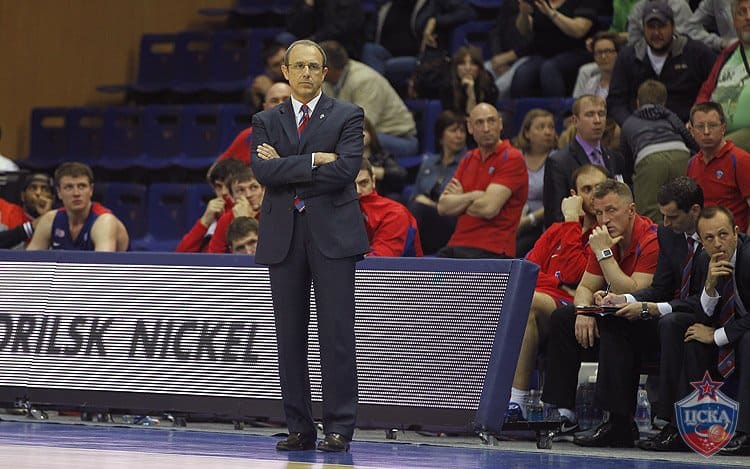
Ettore Messina al Cska
That Russian rule was extremely protective, but it became protective for the veterans, not for the young. Rather let’s hypothesize also at EuroLeague level that in rosters there must be six Italians of which two under-22, then there you force the situation a bit. Or even three, but one or two for sure. But will this be done? Will it happen? Uhm, I doubt it. In the EuroLeague maybe it is time to think of having 13 players on the roster and at least two under-22. I’m voicing hypotheses, but I believe these are fundamental topics of discussion if we want to plan our future without bandaging our heads because there is NIL. Which, I repeat, is a problem, but these boys sooner or later will return, and we will be happy to welcome players like Emejuru who will help the clubs and, hopefully, our national team.