
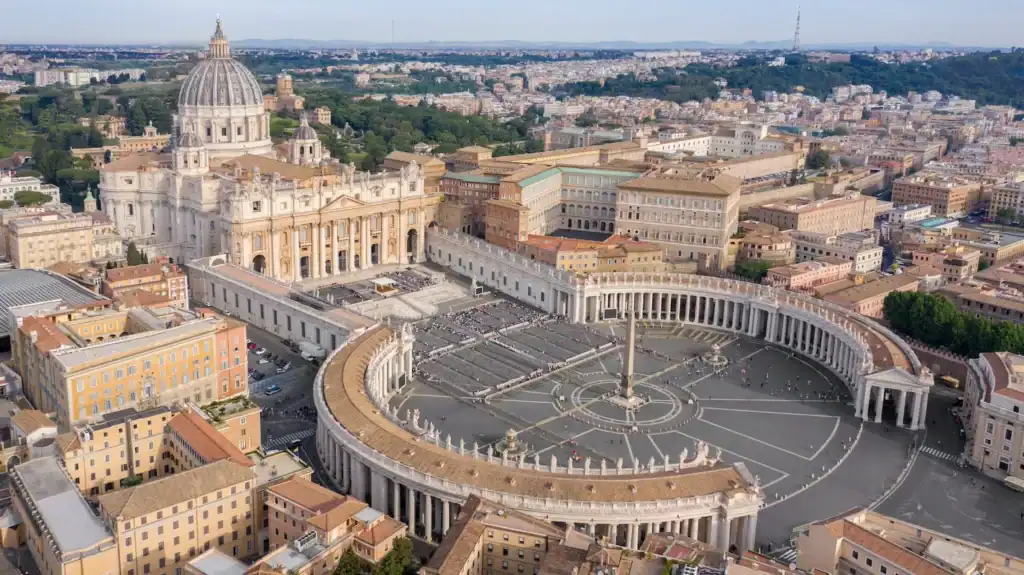
The 2026-27 college basketball season will tip off on Sunday, November 1st in Rome, at the Palazzo dello Sport in the EUR district, featuring an unprecedented matchup between Villanova and Notre Dame. Tip-off is scheduled for 3:30 PM local time, immediately followed by the women’s game at 6:00 PM. This summer, we spoke with and interviewed several key figures who organized this game—an event heavily championed by the Vatican, currently led by a prelate of the Augustinian order and Villanova alumnus, Robert Francis Prevost, known in the secular world as Pope Leo XIV.
CLICK HERE FOR ITALIAN VERSION
The Idea
“The idea was born an hour after the election of Pope Leo XIV,” John Anthony, Executive Vice President of On Location, a global leader in delivering premium sports experiences like Eternal City Tip-Off, told us this summer. The concept was simple: pit America’s most famous and populous Catholic university, Notre Dame, against the Pope’s alma mater, Villanova, in a game hosted in the capital of global Catholicism, Rome. Nineteen months of work, over two hundred people involved, the NCAA, Fox Sports, Player’s Era and the universities all pulled together to package an event that will draw nearly twenty thousand people.

If the connection between Villanova and the event stems from divine upper management, the ties to Notre Dame are more prosaic. John Anthony is a university alumnus (to be precise, a former member of the golf team), a donor, and, above all, the man who—first through his sports travel agency Anthony Travel and now as a senior leader at On Location—has been organizing travel packages for Fighting Irish football fans across America and Europe since 1989. Among many On Location ventures is the Aer Lingus College Football Classic, the season-opening event held annually since 2022 in Dublin, Ireland—Mr. Anthony’s ancestral home—which is to run through 2037.
From alumni to alumni, from the East Coast Augustinians to the members of the Congregation of Holy Cross based in Indiana. Two private schools belonging to the Association of Catholic Colleges and Universities—the organization representing all fifty- three Catholic universities in the United States—both founded in the same year (1842) and each enrolling over ten thousand students.
“The Pope spoke about the unifying nature of sport and pointed out how sports can be a powerful tool to bring people together,” Mr. Anthony adds. Villanova’s president, Reverend Peter Donohue, is of the same generation as the Pope, and the two entered the Augustinian order—founded in 1244—around the same time. The Vatican itself provided crucial logistical and organizational momentum to bring this event to life. The schedule includes a private audience for the teams and traveling fans with the Pontiff and a separate private Mass, a symposium on sports and spirituality held two days before the games, local excursions and cultural activities, team practices, a welcome reception for traveling fans at Rome’s stunning Villa Miani overlooking St. Peter’s.
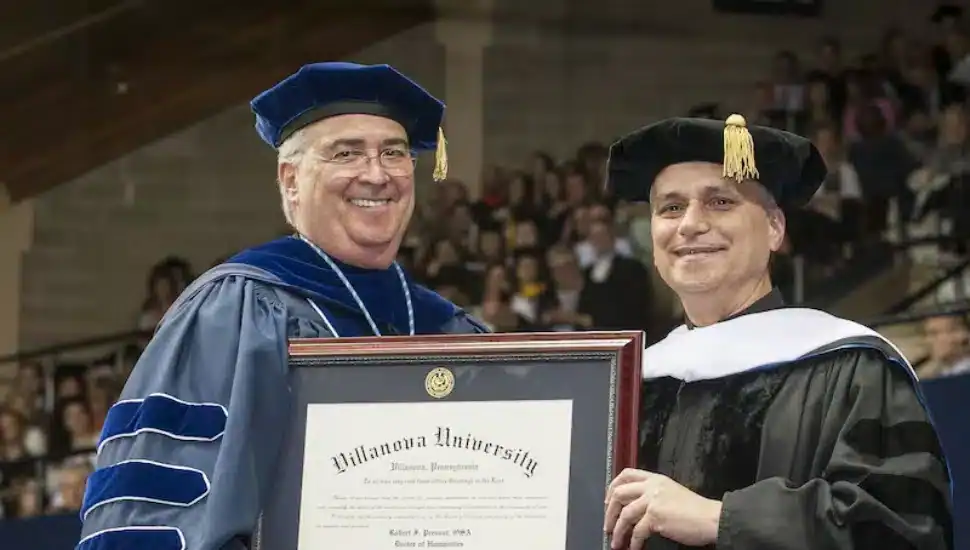

A game—or rather, a week of events—that never would have been possible had a different pope been elected. After all, there was considerable surprise over the election of Pope Leo XIII, not only here in Italy, where local media anticipated an Italian Pontiff, but also in America. As proud Villanova alumnus, former assistant coach under Jay Wright, and current General Manager to coach Kevin Willard, Baker Dunleavy, told us: “I never could have imagined living through a Villanova pope.”
The Team
From the papal election to November 1st: nineteen months to organize everything; over two hundred people involved in planning, producing, and broadcasting the game in Italy and the United States; plus another two hundred personnel on the ground in Rome during the week to manage event logistics and thousands of traveling fans. Not to mention the media outlets, hotels, caterers, and PalaEur facilities brought into the fold. In short, a monumental effort for a brand-new sports tourism venture.
2026 has been an intense year on this front: the Milan-Cortina Winter Olympics, the FIFA World Cup in the summer, not to mention the Super Bowl, the NFL’s international series, and WrestleMania. OnLocation—a part of TKO, its parent holding company—has handled premium hospitality, fan travel logistics, and unique experiences for all of them. The global sports tourism market is approaching the trillion dollar mark annually. But who are the other key players driving this event.
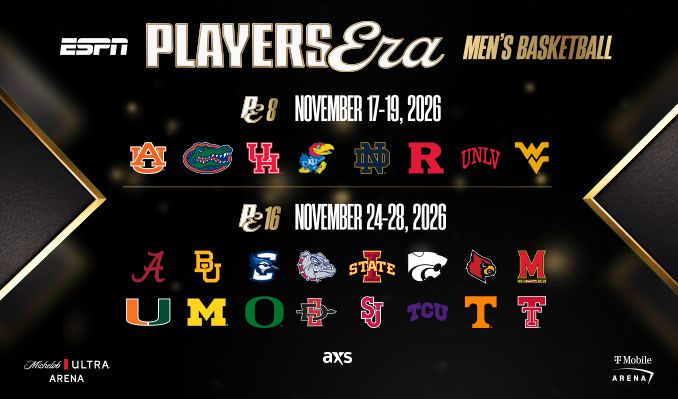

Broadcasting the game will be Fox Sports, the home of Big East basketball broadcasts since 2013. Supervising overall organization and securing sponsorships is Player’s Era. If the name sounds familiar, it’s because they have been running an early season college basketball tournament under the same moniker since last year. CEO Seth Berger—a former high school coach turned businessman in the NIL era—has doubled down on this innovative formula: million-dollar purses for the winners of his early season tournament. Unlike the traditional Battle 4 Atlantis and Maui Invitational; everyone converges on Las Vegas for a week to fight for a million-dollar prize distributed to players via NIL. The Eternal Tip Off thus serves as the ultimate case study for a potential European expansion of their model.
Naturally, Italy was chosen here because of the Pope’s residence in Rome, but the Bel Paese holds strong potential to become an intriguing outpost for future collegiate sports events. Luka Doncic brought the Los Angeles Lakers to his native Slovenia for training camp, and Arizona leveraged its Lithuanian connections for a Baltic tour this summer. However, if the goal is to convince twenty thousand paying Americans to cross the ocean for a week and follow their college teams in Europe, Italy carries undeniable, natural appeal.
According to the U.S. National Travel and Tourism Office, Italy was the fourth most visited country in the world by Americans in 2024 (2nd in Europe, trailing only the United Kingdom), with Rome, Florence, Venice, and Como among the top destinations. Combine this with the strong Italian-American presence among legendary NCAA coaches—such as Tom Izzo, Geno Auriemma, Rick Pitino, and John Calipari—all of whom have deep ties to Italy and are intrigued by the prospect of coaching a game here, and it becomes clear how much of an interesting turning point the November 1st event could be.
The Game
“We could have sold out using just the American market alone, if we wanted to,” John Anthony tells us. Rest assured, however, a block of tickets has been set aside for the Italian market and will go on sale at the end of September. The PalaTiziano was too small to hold the sheer volume of arriving fans, prompting an immediate pivot to the PalaEur— proof that these events are rock-solid investments for organizers who effectively bring their built-in fanbases with them (a stark contrast to efforts like NBA Europe, which had to build a fan base from scratch on foreign soil).
“For us, this trip carries immense value both from a recruiting standpoint and for brand visibility,” explains Wildcats GM Baker Dunleavy, adding: “We know there is a real opportunity to make college basketball global, and we want to be part of that expansion by recruiting players like Suigo.”
Four teams—two men’s, two women’s—featuring elite talent like Luigi Suigo, Tyler Perkins, and Hannah Hidalgo (who averaged nearly a quadruple-double last season), meeting in two games that already carry significant resume weight. We will wait a few weeks before diving deep into roster breakdowns—hoping the NCAA clarifies player eligibility guidelines in the meantime—to focus instead on the surrounding ecosystem of a game that has already achieved a major milestone.
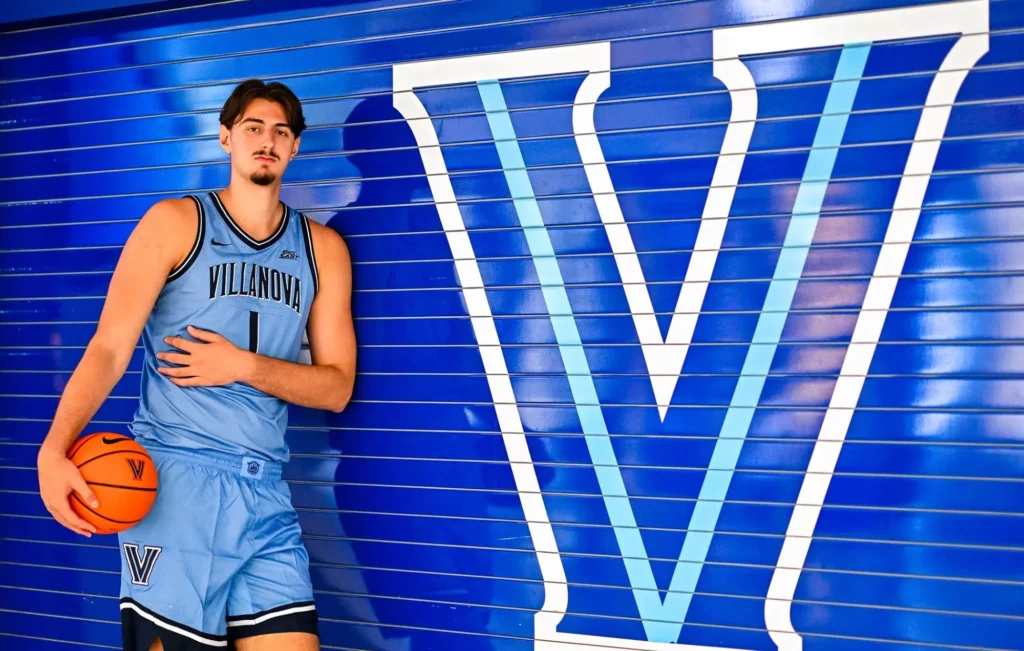

“Summer tours were wonderful, especially for the teams. A couple of weeks together to bond, practice, play varying levels of competition, and have an incredible experience in a foreign country. But those were strictly team activities, right? Now, however, we are talking about a regular-season game—a completely different animal. There is real competition on the line, it counts toward the record, and the teams will take it much more seriously. There’s less time for cultural sightseeing; it feels much more like a business trip. And this time, the fans are coming along for the ride,” John Anthony explains.
It’s a trend we’ve already noticed picking up steam in collegiate sports. Beyond the football games in Ireland, Dublin hosted a matchup between MAAC and Atlantic Sun universities back in 2022, though that was before the NIL era. The Big 12 has spent years trying to stage a conference game in Mexico City, and we expect to see many more opportunities of this nature moving forward. Part of the appeal is that it offers international student-athletes a golden opportunity to earn NIL money without resorting to legal gymnastics and loopholes, given that student-athletes hold student visas and “technically” cannot receive domestic compensation while residing in the U.S.
Organizing a regular-season game abroad rather than trading traditional home environments like South Bend or Villanova marks a seismic shift. The economic impact skyrockets exponentially: “While domestic games generate localized economic impact— fans coming to the arena, ticket sales, food and beverage revenue, parking—this is a transoceanic journey involving tens of thousands of people staying three to five nights, spending their money on experiences, museums, dining, and shopping. The economic impact of individual games at the Aer Lingus College Football Classic is one hundred million euros spent directly by American tourists,” John Anthony explains. And that’s just Notre Dame versus Villanova, we might add. Imagine if globally recognized brands like Duke and Kentucky, or historic powerhouses like Kansas and Indiana, were to play in Italy —or if a football game were organized at San Siro with 80,000 people in attendance. That is why—regardless of the Pope—this game serves as a fascinating blueprint for the future of college sports.
The Future
To borrow a concept from the television industry, Notre Dame-Villanova is effectively a pilot episode. An experiment to test whether NCAA regular-season games in Italy and Europe have a sustainable future: “We want to continue to grow and create unforgettable experiences on an international scale so that the entire NCAA ecosystem benefits. You know, when you start something new, people give you a chance, and then you evaluate whether it’s worth continuing,” John Anthony explains.
In a world governed by NIL—where budgets grow by “30 to 40% every offseason,” according to GM Dunleavy—scouting new markets and cultivating partnerships and sponsorships outside of traditional booster circles is a logical move for a system that is
rapidly expanding, yet undeniably unsustainable. The Eternal Tip Off concept revolves around the Pope’s presence in Rome, but when it comes to business, Americans are second to none. Certainly, they didn’t anticipate how having Luigi Suigo on board would effortlessly grease the wheels for connections with potential Italian sponsors.
We close with Mr. Anthony’s broader vision for the future: “We know what we want, and what the universities and teams want. A unique experience blending basketball, culture, and, in this case, faith. It’s an event that transcends the game itself. It’s a global platform to showcase elite talent and major programs at a level that will accelerate the growth of collegiate sports. There will be a powerful narrative surrounding this game, both for those attending in person and for those watching on TV”—and we certainly hope this is just the first of many such events to come to Italy.